
St. Joseph Gardens of Prayer and Peace
-
-
About Garden Ministry
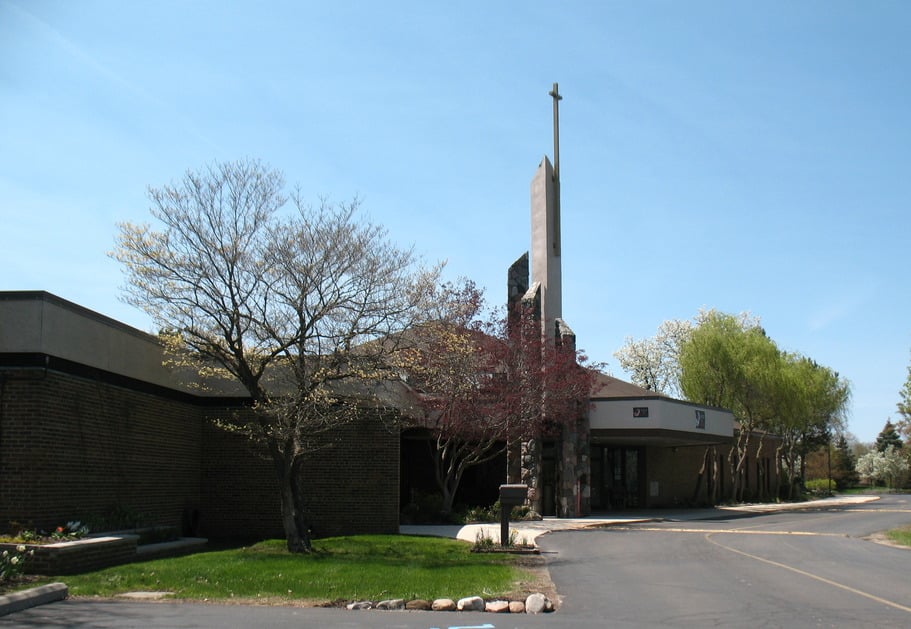 The St. Joseph Gardens of Prayer and Peace (the “Gardens”) are located throughout the church’s campus. Almost 30 gardens, of all shapes and sizes, comprise the Gardens. The Gardens are curated by the members of the parish’s Garden Ministry (“Ministry”). This Ministry is one of the most active Catholic garden ministries in the State of Michigan, and it has transformed the church’s property into an outdoor venue for prayer, reflection, and meditation.
The Ministry started in roughly 2011 by a single gardener struggling in the summer heat to improve upon a garden area near the church’s entrance. Thereafter, year after year, more parishioners stepped forward, more gardens were formed, and 15 years later, the Ministry is comprised of 16-18 parishioners who actively maintain the Gardens throughout the year.
St. Francis of Assisi is the patron saint for Garden Ministry. St. Francis reminds us that God’s mandate to respect life does not just extend to human life, but extends to all of God’s creations, including animals and plant life. One of the Ministry’s missions is to ensure that threatened species, such as the monarch butterfly, are provided an environment to survive. Consequently, common milkweed is a staple in the Gardens as it is the sole host plant for these butterflies. Another mission of the Ministry is to assist wildlife if possible. Thus, ornamental grasses are used throughout the Gardens to provide cover and protection to wintering wildlife, and the seeds from these grasses provide birds with food in the autumn and winter. Additional gardening practices are adhered to preserve scarce resources like water. Garden Ministry is guided by the understanding that God’s fragile ecosystem needs our protection and vigilance.
The members of Garden Ministry are a compassionate group of men and women whose goal is to enhance the outdoor environment so that it draws us to pray as one in communion with God. Gardening knowledge is not a prerequisite to be a member of Garden Ministry but rather, a commitment to life in all its forms, the importance of prayer, and a belief that a calling to this Ministry is a path God has for our lives. Opportunities for solitude and prayer abound in the Gardens with specific devotional areas dedicated to the Blessed Virgin Mary, the Rosary, and St. Michael. Unique to the Gardens is the ability to pray outside and at any time of the day or night. All of the prayer venues noted above are provided with exterior lighting for evening prayer and devotion.
The Gardens are designed to provide seasonal interest which tends to follow the liturgical cycle of the Church. Spring in the Gardens brings emerging bulbs and flowering trees and shrubs. Spring is a reminder of Christ’s Resurrection and new life through baptism. Summer ushers in the butterflies, birds, pollinators, and flowers in bloom. All of this is an opportunity to sit in a devotional site in the Gardens and acknowledge the good of God’s graces and His creations. Autumn in the Gardens draws our prayers to thanksgiving and preparation for the coming of Christ. Winter brings a quiet beauty to the Gardens with the hope of Christ’s coming and His Resurrection in the Spring. Season by season, the Gardens are a living sanctuary where nature and faith come together, encouraging parishioners and visitors to grow in prayer and deepen their devotion to the Catholic faith. God is present in every season in the Gardens.There is an appointed time for everything, and a time for every affair under the heavens. A time to be born, and a time to die; a time to plant, and a time to uproot the plant. (Ecclesiastes 3:1-2)
And yes, anecdotal stories abound of how prayers are answered while praying in the Gardens. Sometimes messages of hope and love pass through the rustling of the blades of the ornamental grasses. Or, the Holy Spirit may guide a thought, a decision, with the gentle whispers of the winds that stir the leaves in the trees. Sometimes seeing a butterfly just when you needed a measure of hope or maybe a moment of grace is the message you see. If you listen, the Gardens will speak to you too. Signs of answered prayers just might be found in the Gardens.
The St. Joseph Gardens of Prayer and Peace have been recognized and featured as a garden on the Catholic Garden Network’s Directory (CGN). Much appreciation is extended to this organization for recognizing the importance of garden ministries and Catholic gardens throughout the United States.
Also, the Gardens are now registered nationally as an official Monarch Waystation in the State of Michigan. The Gardens are being recognized as an important evangelization through beauty, and gardens in Catholic tradition have been tied to vocations and to saints; all of this is located in the Archdiocese of Detroit, MI.
Additionally, Fr. Stan, the pastor of the parish, has provided direction and tremendous assistance in supporting Garden Ministry. He too is a gardener and is the Ministry’s “Steward of the Harvest.” Fr. Stan is a vegetable and herb grower, and he brings to Garden Ministry his practical skills of agricultural management, including composting and sustainable practices. Fr. Stan is known to share his bounties with parishioners, and he inspires healthy eating. The Vegetable Gardens are a place of nourishment, education, and gratitude. As Steward of the Harvest, Fr. Stan tends his gardens with care, remembering the words of Scripture:When you reap the harvest of your land, you shall not be so thorough that you reap the field to its very edge, nor shall you glean the stray ears of grain. Likewise, you shall not pick your vineyard bare nor gather up the grapes that have fallen. These things you shall leave for the poor and the alien. I, the Lord, am your God. (Leviticus 19:9-10)
Finally, a generous thank you is extended to the Archdiocese of Detroit for its complimentary support and suggestions throughout the years. As Garden Ministers, we not only garden but we pray in the gardens, especially for our beloved new Archbishop, the Most Reverend Edward J. Weisenburger. Plans are being discussed to add another garden or rename an existing garden that reflects the importance of the Diocese’s input and support in this Catholic tradition of stewardship.
Join Garden Ministry and more than just flowers will bloom! Click to view
-
-
Registry of Garden Names
- Angel Forest (restricted Area)
- Bird Bath Garden
- Blessed Virgin Mary Grotto
- Boulevard Gardens (contains 7 separate island gardens)
- Grace's Garden (restricted area)
- Heart of Mary Island
- Mailbox Garden
- MMJ Garden
- Monarch Island
- Peace Garden
- Praying Hands Garden
- Psalm 147 Island
- Rosary Garden
- Skipper Butterfly Island
- Stained Glass Garden
- St. Francis Garden (restricted area)
- St. Michael Garden
- Ten Commandments Garden
- Wayside Garden
- Wildflower Island
- Yucca Island
- Vegetable Gardens (restricted area)
-
Angel Forest (restricted Area)
 Angel Forest is located on the east side of the rectory and is a restricted area for personal observation and viewing. The landscaping in this area is a continued effort to provide privacy and security for rectory personnel. Angel Forest is viewable from the common public sidewalk or the street. Angel Forest is named, in part, for the large white angel statue that faces an eastern exposure to catch the morning’s rising sun. This orientation is deliberate because the rising sun traditionally represents Christ. Towering behind the angel are several green giant arborvitaes. The angel draws your eye toward it as if to say that she is quietly watching over you. The angel can be seen from the street and from many angles.
The angel statue overlooks a forest framed by mature pine trees. Newer plantings have expanded the area and added interest to the church’s devotional gardens. Several green giant arborvitaes, along with two additional white pines, form the forest’s outer ridge. At its center is a carefully planted Forest Pansy Redbud Clump. Morning and afternoon sunlight filters through its leaves, casting a rich magenta-red glow. This tree offers interest throughout the year: in early spring, vibrant purple-pink flowers cover its bare branches; by late spring, burgundy-purple, heart-shaped leaves emerge, creating one of Angel Forest’s most striking displays. Three Slender Silhouette Sweetgum Trees add further interest with their narrow, columnar form. These trees can grow 50 to 60 feet tall while remaining only 5 to 6 feet wide, and their fall foliage blends yellow, orange, red, and purple.
  St. Francis often retreated to wooded areas and forests to pray. Around September 14, 1224, he prayed at Mount La Verna in the Northern Apennines, in eastern Tuscany, where he is believed to have received the stigmata.
“For God commands the angels to guard you in all your ways. With their hands they shall support you up, lest you strike your foot against a stone.” (Psalm 91:11-12)

-
Birdbath Garden
 The Bird Bath Garden evokes an old-fashioned cottage garden, with daisies, roses, hostas, and, of course, a birdbath. Few scenes express a garden’s spirit more fully than a bird bathing, splashing, or cooling itself in the water.
Spring arrives quietly here, carried on the fragrance of multi-colored hyacinths. Variegated irises add texture and height, and their distinctive grape-like scent delights garden visitors and passersby.
A faux cobblestone path welcomes parishioners to the church entrance, leading past the birdbath and a broad collection of hostas in green, yellow, and variegated tones. Contrasting hosta foliage and upright white Shasta daisies create balance and harmony. Seasonal interest continues with a field of Black-eyed Susan and a half-moon border of Millennium allium. The allium’s soft rosy-purple blooms brighten the summer garden and attract skipper and swallowtail butterflies. In fall, their seed heads draw goldfinches, house finches, purple finches, chickadees, and other songbirds. Eastern Tiger Swallowtail ButterflyLarge sweeps of Hameln grass follow the garden’s curves, their graceful foxtail-like blooms extending visual interest into winter. Rose bushes add red and deep pink accents, while a container of annuals brings bold orange and red. Orange daylilies ring the garden, announcing the start of summer just in time for July 4th.
A small statue of the Blessed Virgin Mary stands before a trellis covered with sweet autumn clematis. Behind it, tall Karl Foerster grasses sway in front of three stained-glass windows. Boston ivy softens the church’s back wall, its brilliant red leaves marking fall’s arrival. A large honey locust provides partial shade for understory plantings and can grow up to seventy feet while tolerating compacted soil, ice, pollution, and salt.
The Bird Bath Garden holds a special place in the Garden Ministry’s heart. St. Francis of Assisi is widely remembered for his bond with birds. While traveling through Italy’s Spoleto Valley, he saw a flock following him and delivered what became known as his “sermon to the birds about God’s love.” In The Little Flowers of St. Francis, he is credited with preaching directly to the birds, including these words: Looking at the Rosary Garden from the Birdbath Garden
"…you are bound to heaven, to God, your Creator. In every beat of your wings and every note of your songs, praise him. He has given you the greatest gifts, the freedom of the air. You neither sow, nor reap, yet God provides for you the most delicious food, rivers, and lakes to quench your thirst, mountains, and valleys for your home, tall trees to build your nests, and the most beautiful clothing: a change of feathers with every season. You and your kind were preserved in Noah's Ark. Clearly, our Creator loves you dearly since he gives you gifts so abundantly. So please beware, my little sisters, of the sin of ingratitude, and always sing praise to God."
The Bird Bath Garden gives our feathered sisters a place to sing praise to God. Listen closely, and you may hear a yellow warbler’s song—and perhaps join in the praise yourself.
-
Blessed Virgin Mary GrottoThe Blessed Virgin Mary Grotto is a wonderful mixed garden of conifers, trees, shrubs, hard landscaping, interesting seed heads, outlines of perennials, climbing vines, and religious statues. This garden area has something for everyone! Spring in the Grotto area is early to arrive as Lenten Roses push their blooms up at the feet of the statue of St. Joseph. Grape hyacinths meander throughout the Grotto as if a small stream or brook was guiding the prayerful to the statue of the Blessed Virgin Mary. Daffodils and hyacinths welcome the change of seasons along with a cardinal or two.

The Blessed Virgin Mary is the focus of this garden and is surrounded by an arching trellis. A wild rose grows on one side of the arch, and climbing white sweet autumn clematis is on the opposite side of the arch. In September, the fragrance of the sweet autumn clematis encompasses the area of the Blessed Virgin Mary almost as if she were actually present in the Grotto. Varieties of hosta nestle the Blessed Virgin Mary with hues of green and yellow. Butterfly weed is tucked in between the hosta to provide nectar for butterflies, who are a venturing companion to the Blessed Virgin Mary. Summer arrives in the Grotto with orange daylilies and peach colored shrub roses. The area surrounding the Blessed Virgin Mary is outlined with structural interest from native grasses that sway with the slightest movement of a breeze to variegated purple irises. Order within the garden is evidenced by the neatly arranged rows of Millennium allium and sedum, which serve to assist pollinators on their journey to the Rosary Garden. The soft colors of this garden contrast with the burgundy red leaves of a weeping red bud. The Grotto contains cup plant, which is a natural nectar plant for butterflies and bees. The broad paired leaves of the cup plant surround the square stem of the plant so completely that they form a small basin or bird bath, literally a “cup” that catches rainwater. Of course, a bee or hummingbird can be seen drinking from the cup!
Tranquility envelopes the area as an angel statue, surrounded by ground cover, stands guard over the Grotto. The interior of the Grotto landscape is naturally covered with pine needles, and large stretches of ostrich ferns vertically raise color, form, and texture into the space. Container planters throughout the Grotto provide seasonal interest to those who stop to pray the rosary or other prayers of comfort and healing.
The Blessed Virgin Mary Grotto is designed for solitude, meditation, reflection, and prayer; it is the most utilized outdoor prayer venue on the church campus. There are benches and night lighting in the garden, making it a welcoming place for prayer throughout the evening and into the night.“If you feel distressed during your day, call upon our Lady. Just say this simple prayer: ‘Mary, Mother of Jesus, please be a mother to me now.’” (Teresa of Calcutta)
-
Boulevard GardensThe Boulevard Gardens are a collection of 7 small island gardens located in the main entrance to the church and extending into the parking lot. In contrast to the other gardens, the Boulevard Gardens are designed with a more uniform look in plant material, along with drought-resistant plants. Karl Forrester grasses dominate these gardens. Seasonal interest is achieved with the grasses’ 4–5-foot spears moving in the gentle breezes of the spring to be followed by the seed heads in mid-summer. These grasses also provide spring cover for a nesting duck or two. Winter interest abounds as layers of snow fall within the extended blades of the grasses and creates fountains of white falling in the air. The grasses provide shelter from wind and predators for butterflies, and their upright stems offer resting and basking sites. The Boulevard Gardens are also a natural habitat for the monarch butterfly, as common milkweed is grown to facilitate its population. It is noted that milkweed is grown throughout the gardens to assist in protecting this at-risk species.
 Four of the parking lot islands are planted with forsythias. This shrub is tough and tolerates extremely dry conditions. It also tolerates pollution and urban environments, which makes it natural for a parking lot garden. The yellow color of its spring blooms is striking, and it shoulders the overall spring color in the Boulevard Gardens by lifting the yellow blossoms to vertical heights with an interest in texture and form. Accenting the forsythias are generous plantings of Sedum Angelina. This sedum is extremely drought-tolerant, and its initial color of yellow provides highlights from the ground to the aerial yellow blooms of the forsythias. By fall, Sedum Angelina turns to color tones of orange.
 The Boulevard Gardens are filled with color and motion. All of the Boulevard Garden Islands are planted with orange daylilies. Daylilies are known for their drought-hardiness and are a staple throughout the gardens on the campus. In fact, orange daylilies, like common milkweed, are found in almost every garden. The mass planting of the orange daylilies in bloom creates one of the most dramatic displays of summer as you drive onto the church property. An introduction to the chorus of the orange daylilies actually starts in the first garden at the entry of the church, The Peace Garden. Summer breezes move the daylilies, and the flower stalks sway in unison. This rhythm adds movement and life to the landscape.
Spring interest in these gardens can be found with daffodils and a variety of colorful hyacinths.
The Boulevard Gardens are a graceful transition from the public venue of outside gardens to the peace, quiet, and solitude of the interior of the church; the ultimate path to reflection. These gardens are the first impression for visitors, and their overall effect is one of hospitality. Driving through these gardens, one senses a path of welcome, peace, and stewardship.“I am the gate. Whoever enters through me will be saved and will come in and go out and find pasture.” (John 10:9)

-
Grace's GardenGrace’s Garden is a small half-moon-shaped garden that borders the driveway to the priest’s rectory. Its function is more for privacy and barrier restriction to the rectory premises than a garden for public access.

This garden has seasonal interest from spring to winter. Daffodils and hyacinths scatter color in the spring to be followed by the blooms of an overarching forsythia. Irises and daylilies provide texture with a blend of purple and oranges as part of the color scheme. Ornamental grasses add interest in the summer and are left intact during the winter.
This garden is named after Fr. Stan’s dog, Grace. An image of Grace is sometimes found tucked in the garden as a reminder that the gardens are enjoyed by everyone!“For by grace, you have been saved through faith, and this is not from you; it is the gift of God….” (Ephesians 2:8)
-
Heart of Mary IslandThe Heart of Mary Island is a garden in the shape of an island located at the outer boundary of the campus. Similar to the other island gardens, it too is dry and lacks a water source. Consequently, plant material must be drought-resistant, and water is brought to this location with the use of the Ministry’s water cart, hand-carried water containers, or through natural resources. Like any garden, this garden is a living space, and it reflects the relationship between people and the natural world.
The Heart of Mary Island is aptly named after its curator. The focal point of this garden is a stone-shaped heart, which reminds us of Mary’s maternal love for us, her example of humility, faith, compassion, and complete trust in God’s will. Plant selections found in this garden include common milkweed, swamp milkweed, Black-eyed Susans, daylilies, coreopsis, aster, and other native plants.
The biodiversity in this garden is a benefit to pollinators, butterflies, birds, and other wildlife. It also helps sustain the local ecosystem. In fact, the curator of this garden has reported an initial sighting of a Pipevine swallowtail in the garden.
This garden is a great example of a place where seeds become flowers, small acts of care result in beauty, and the cycle of life and nature remind us of patience, hope, and renewal. The Heart of Mary Island is a garden that offers a wonderful gift to both people and the environment. It’s definitely a garden watched over by Mary’s Heart.“Immaculate Heart of Mary, meek and humble heart, make my heart like unto the heart of Jesus.” (A variant of an old, well-established prayer from the traditional Litany of the Sacred Heart of Jesus, said in response to invocations in a litany.)
 A moth resting in the shade
-
Mailbox GardenThe Mailbox Garden is a small, charming garden that surrounds the base of the parish’s mailbox! It’s a small threshold space that reminds us that a message is being carried or delivered and that someone is waiting to receive that message. A simple mailbox garden with a familiar message in Catholicism: waiting for a message or an answered prayer. An angel quietly stands below the mail drop, keeping an eye on outgoing and incoming mail. The angel, like the patron saint of travelers, watches over those who pass by or travel to other parts of the church campus. She is encircled by orange-hued annuals, including begonias, marigolds, and gaillardia. Milkweed, a staple in all the gardens, is present, along with Black-eyed Susans, which provide nectar to a Michigan endangered small butterfly called the Poweshiek Skipperling.
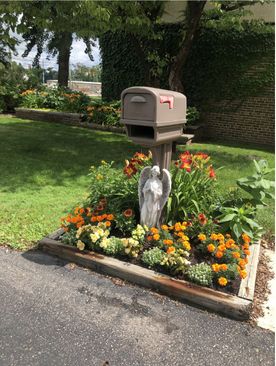
The Mailbox Garden is a small ecosystem and a welcome entrance to the church. However, it is also a visual representation of spirituality. For example, the mailbox itself could represent the heart open to receive God’s love and graces; the open door of the mailbox could represent our willingness to hear, grow, and be transformed by God’s love. The post holding the mailbox represents our strength in faith, holding up our belief in God. A simple mailbox is now a visual of our faith.
The Mailbox Garden is a hospitable environment for those who simply deliver the mail as a daily task in life. This welcoming environment reminds us of when Abraham warmly welcomed three visitors as detailed in Genesis 18:1-5. Further, the soil from which the flowers grow in this garden is the foundation on which God’s Word plants deep within us the truth of life and the meaning and purpose of creation. “But as for the seed that fell on rich soil, they are the ones who, when they have heard the word, embrace it with a generous and good heart, and bear fruit through perseverance.” Luke 8:15.
To some, a mailbox is just a mailbox. To the St. Joseph Gardens of Prayer and Peace, the Mailbox Garden is a visual representation of some of the mainstays of our Catholic faith. Additionally, the mail that travels back and forth in a simple mailbox actually delivers the seeds of news, whether in the form of a letter, a communication, a thank you note, a newsletter, or other written forms of news. But we know that the seeds of news are carried in the form of communications from the teachings of Paul in his letters to the Romans, Corinthians, and Galatians. Much of the New Testament actually was hand carried messages of news. Paul’s letters were handwritten communications carried sometimes hundreds of miles by couriers who read them to communities waiting to hear from him. The Mailbox Garden is given a place in the Gardens because it is a descendant of the apostolic system of communicating across a distance.
“Do not be afraid; for behold, I proclaim to you good news of great joy that will be for all the people.” (Luke 2:10)
-
MMJ GardenThe MMJ Garden is a pocket garden named with the first initials of the three Garden Ministers who created this venue. As with most pocket gardens, this one too is a small garden space tucked between two exterior walls of the church. The vertical interest in this garden is a large pine tree with an understory planting of a variety of perennials and annuals. For example, roses are trellised against a backdrop of hosta, ferns, daisies, and irises. Petunias and other annuals weave in and out of hens and chicks and low creeping sedum. Fall interest follows with blooming dahlias and mums. Several container planters are strategically placed throughout the garden with color contrast annuals.
The MMJ Garden has a sitting table near its plantings so that parishioners can sit and pray and enjoy the sights and senses of this garden. Every parish has room for a pocket garden. These gardens demonstrate faithful stewardship by transforming unused corners into places that nourish the human spirit. The MMJ Garden offers refuge from the distractions of the world, and it invites us to “be still” and to open our hearts to prayer. This Garden teaches us that holiness is not measured by the grandeur of the structure but by the love and care invested in the smallest of gardens. The MMJ Garden seeds so much more than just flowers.“The kingdom of heaven is like a mustard seed that a person took and sowed in a field. It is the smallest of all the seeds, yet when full-grown it is the largest of plants”(Matthew 13:31-32)
-
Monarch Island
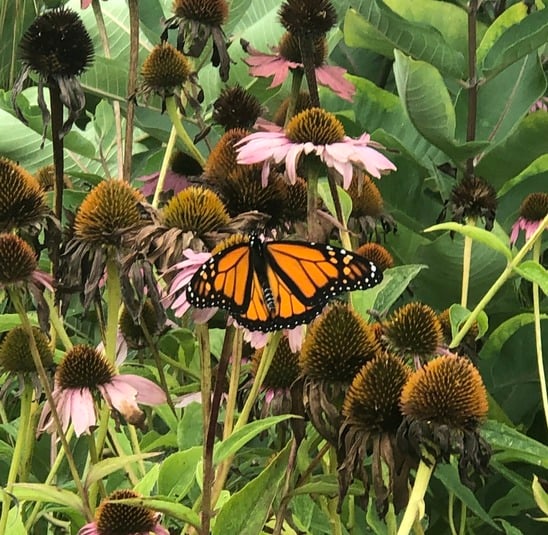 Monarch ButterflyMonarch Island is located in the interior of the campus and is in the shape of an island. This garden is a tribute to Garden Ministry’s commitment to provide an ecosystem that assists in fostering population growth for the at-risk and vulnerable Monarch Butterfly. Monarch Island is large and heavily planted with common milkweed and two varieties of native grasses. Milkweed is the only host plant for the Monarch Butterfly. The monarch caterpillars eat this species of plant, which includes common milkweed, swamp milkweed, and butterfly milkweed. Monarch Island is also planted with purple coneflowers and orange daylilies. The mid-summer blooms of the coneflowers provide adult monarch butterflies with nectar-rich flowers and nourishment, while the daylilies attract hummingbirds. The St. Joseph Gardens of Prayer and Peace, which includes Monarch Island, have been nationally recognized as a Monarch Way Station. A marker designating this distinguished honor carries with it the obligation to deliver habitat conservation for the Monarch Butterfly.
 Additional wildlife habitat has been created on Monarch Island with the thick overreaching branches of the ornamental grass Karley Rose. Its decorative rose-purple plumes filter sunlight wonderfully and if left intact for the winter, become cover for a nesting duck or geese. Yes, Garden Ministry has signs that it uses when it is discovered that there is a nesting mother in the grasses. And the sign says, “Please do not disturb, mother nesting!”
“If you have men who will exclude any of God’s creatures from the shelter of compassion and pity, you will have men who will deal likewise with their fellow men.” (St. Francis of Assisi)

-
Peace GardenThe Peace Garden is designed to balance beauty and nature. As one of the larger gardens on the church grounds, it offers ample space for visual interest and natural grace. Like the other gardens, it changes beautifully with the seasons. In spring, bright yellow and orange daffodils bloom as for
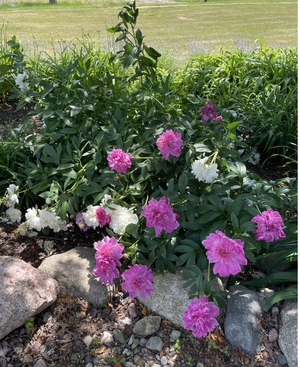 sythia fills the background with arching branches of golden blooms. Cherry blossoms and a vivid carpet of creeping phlox add to the season’s charm, and no garden would feel complete without the timeless peony. As spring fades, summer brings even more color to the garden.
 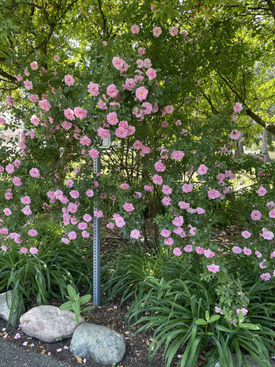 A climbing rose forms a striking wall of cascading pink flowers. The sweeping edge of the flower bed is a border of Walker’s Low catmint, a drought-tolerant perennial that blooms all summer in a soft, cloudlike blue. Behind it, tall orange daylilies bloom in July, and by September, fall mums keep the garden vibrant.
Designed with nature in mind, this garden is dedicated to pollinators, especially bees, through the use of pollinator-friendly plants. Without pollinators, many flowers and vegetables could not produce seeds or fruit. Their decline is due in part to habitat loss. The Peace Garden reflects St. Francis’s ecological call to sustain life in all its forms by restoring a supportive habitat for pollinators while also showcasing a wide variety of textures and colors. Last, like all the curated collections of gardens on the campus, milkweed is a familiar and necessary planting in the Peace Garden.
“Lord, make me an instrument of your peace; where there is hatred, let me sow love; where there is injury, pardon; where there is doubt, faith; where there is despair, hope; where there is darkness, light; and where there is sadness, joy.” (The Peace Prayer, attributed to St. Francis of Assisi)

-
Praying Hands GardenThe Praying Hands Garden takes its name from the praying-hands bird bath nestled among the plants. This bird bath is perfect for hummingbirds and if you look closely, you just might see one! This garden embraces the main front doors of the church and it welcomes those on their daily or weekly pilgrimage of prayer and community worship.

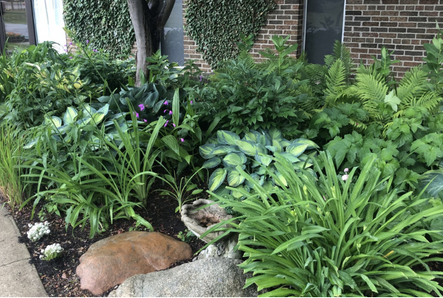
A large Japanese red maple anchors the garden, sheltering a variety of perennials beneath its branches. This diversity makes the garden a jewel, with color shifting beautifully through the seasons.
As Lent unfolds in March, spring begins with Lenten roses, or hellebores, whose cup-shaped blooms rise from evergreen leaves. Soon after, a large bleeding heart displays its delicate, heart-shaped flowers along soft, arching stems. Daffodils join the spring chorus, and passersby are sure to enjoy the sweet fragrance of hyacinths.
Hostas and ferns anchor the background of this garden and the large hosta leaves provide cover for rabbit nests and bunnies. While temperatures are still on the cool side, this garden is also dotted with color from the gentle columbines. Summer brings bush roses, spider lilies, and coneflowers, and the mild, lovely scent of common milkweed adds fragrance.
As early fall arrives, yellow Black-eyed Susans brighten the garden, while royal red mums add striking contrast. The garden’s beauty lies in its rich variety of plants, with something new appearing each week in the Praying Hands Garden. Still, these treasures are easy to miss unless you take time to walk by—and when you do, fold your hands and say a prayer.“While you are proclaiming peace with your lips, be careful to have it even more fully in your heart.” (St. Francis of Assisi)
-
Psalm 147 IslandPlant material on this small island garden is few yet important to the overall mission of Garden Ministry. Black-eyed Susans are plentiful, as they are a nectar source for the endangered Poweshiek Skipperling butterfly.
 Poweshiek Skipperling butterflyMilkweed provides vertical interest in this garden along with its early summer scent of a honey-like fragrance – compared to vanilla with a hint of lilac. The scent is the strongest in late afternoon or evening.
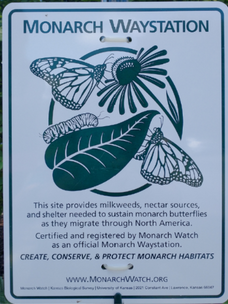
A Monarch Waystation marker is located in this garden to denote that The St. Joseph Gardens of Prayer and Peace are nationally recognized as a Monarch conservation site. Daylilies provide color for summer, and a stunning red perennial hibiscus encompasses a large portion of one part of the garden.
Most important to Psalm 147 Island is the Ministry’s rain gauge. This instrument teaches us stewardship and makes us more mindful about conserving water. Garden Ministry clearly celebrates the life-giving gift of rain, as none of the gardens have irrigation. Every rainfall is welcomed and is a reminder of God’s providence in nourishing flowers, trees, and wildlife. Periodic readings of the rain gauge are disseminated to members of Garden Ministry who, in turn, are able to adjust the water requirements of their respective gardens. This garden blends environmental responsibility and spiritual reflection into one meaningful landscape.
Psalm 147 Island is where science, faith, and nature meet.Sing to the Lord with thanksgiving; With the lyre celebrate our God, Who covers the heavens with clouds, provides rain for the earth, makes grass sprout on the mountains…. (Psalm 147:7-8)
-
Rosary Garden
 The Rosary Garden is dedicated solely to the rosary. This garden has five large, one-of-a-kind, individual garden trellises that span the length of a long sidewalk. Each trellis was handcrafted by a metallurgical artist that depicts the artist’s interpretation of the five Glorious Mysteries of the Rosary. The Rosary Garden is filled with color and interest from spring into winter, and is, by far, one of the most popular gardens on the church’s campus.
Four Serviceberry shrubs anchor the long garden and serve to add height to the design. Spring announces itself when the clustered white flowers on the shrubs open up and stretch from a winter’s sleep. Various daffodils and hyacinths are scattered throughout the garden. Walking along the garden, a wonderful grape fragrance is carried by the air as the variegated irises push their sword-like leaves into the background. Pastel-colored lilacs, which add softness and fragrance to the landscape, enhance the enjoyment of this garden.
June brings the color of passion as deep, rich red peonies dance among a green background of various ground covers, including ajuga. Ajuga’s blue spikes contrast beautifully with the peonies and line the border of the garden with color and structural order. The backdrop of the garden is lined with large bold-colored orange daylilies, which lift color in the space and warmly wrap the garden with exuberance. These daylilies are a perfect complement to the texture and seasonality of the garden. Other daylilies are starting their bloom too, and the enchantment of the range of color is noteworthy.
Various coneflowers, a North American native, were chosen for the Rosary Garden to demonstrate an eclectic array of color, height, and texture in the garden, and to extend the flowering season from summer into fall. The coneflower collection attracts butterflies, birds, and bees and truly is a flower welcomed by St. Francis.
No garden would be complete without a generous array of Shrub roses, allium, and a carpet of daisies. To extend the garden’s summer bloom, two Limelight hydrangeas are balanced toward the center of the garden, adding emphasis, function, and beauty. Their large flowers sometimes even find their way into an altar vase or two!
Fall interest in the garden continues as the Karl Forrester grasses begin to go to seed and gently sway in the warm, harvest breezes. The grass stalks reflect the sunlight and bring an autumn glow to their seed heads as if candles had been lit. Black-eyed Susans and pink sedums provide Fall color interest.
Most notable in the Rosary Garden are the five garden trellises, each planted with plants that are significant to the donor of the individual trellis. Because the trellises stand almost seven feet tall, climbing vines and roses were selected to emphasize vertical gardening techniques along with the layering of color and texture. Climbing roses, spring-blooming clematis, and fall-blooming sweet autumn clematis wrap the steel structures of the individual trellises. At night, the illuminated trellises transform the row of metal art pieces into a striking display of luminous color. The Rosary Garden offers an outdoor setting for praying the rosary, day or night.Hail, O Lady, Holy Queen, Mary, holy Mother of God, who are the Virgin made Church, chosen by the most holy Father in heaven, whom He consecrated with His most holy beloved Son and with the Holy Spirit, the Paraclete. In you there was and is all fullness of grace and every good. (St. Francis of Assisi)
-
Skipper Butterfly IslandSkipper Butterfly Island is just west of Monarch Island and is a smaller, more oval-shaped garden island. This garden is in its early stages of development and is intended to be a complementary garden to the larger Monarch Island. Both gardens are dedicated to the conservation habitat of specific butterflies.
Michigan is home to three endangered butterfly species: the Karner Blue, Mitchell’s Satyr, and Poweshiek Skipperling. Skipper Butterfly Island already has milkweed planted, so the initial plant material for the Karner Blue butterfly is in place. An additional planting for this butterfly to accommodate its larvae includes wild lupine. Next, Skipper Butterfly Island is close to a quasi-possible fen (wetland) area that is a required habitat for Mitchell’s Satyr. Male Karner Blue
Additional plantings in this garden include sedges, especially the Carex genus, for the larvae of this butterfly. The adult Mitchell's Satyr has been observed attracted to the short-toothed mountain mint, and this plant is planted on Skipper Butterfly Island. This butterfly is the rarest of all butterflies and is only found in Indiana and Michigan. Last, because Skipper Butterfly Island is in proximity to a quasi-wetland area, the Poweshiek Skipperling may also be able to be attracted to the area. Adults are attracted to the Black-eyed Susan, and the gardens as a whole have a good supply of this nectar-loaded flower. Female Karner Blue
Skipper Butterfly Island is not just a garden sanctuary for endangered butterfly species but for all skipper butterflies that are natural to the Michigan climate. Many skipper larvae feed on native grasses, which include bluestem, side-oats grama, and switchgrass. Adult skippers prefer nectar from the short-toothed mountain mint, purple coneflower, Black-eyed Susan, butterflyweed, and the New England aster; all of which are located in the gardens.
The patron saint of St. Joseph’s Garden Ministry is St. Francis of Assisi. St. Francis calls us to be faithful stewards of creation, and we conceptualize, plan, design, and garden with a profound sense of kinship with the natural world. Skipper Butterfly Island is dedicated to our mission of conservation and protecting living creatures.“Every creature is a gift from God and deserves our respect and care.” (St. Francis of Assisi)

-
Stained Glass GardenThe Stained-Glass Garden is the garden along the sidewalk at the front of the church where the stained-glass windows are located. Various varieties of hosta make up the dominant plant structure in this garden. Hostas of all sizes and shades of green are the focal point, along with the nestling of wispy ferns. The selection of hostas was designed to contrast the hues of green with the varied textures of the leaves of the plants.
This garden vignette provides interest throughout the year. The bell-shaped blooms of the hosta extend throughout the landscape, and their stems carry colors of blue, purple, and white. By fall, the leaves turn yellow and gold, and their colors are well matched with vintage grown pumpkins in shades of red and bronze.
Although this garden is mostly monochromatic, color is introduced through several mediums. First, the stained-glass windows add vertical color along the garden with hues of red, blue, and yellow. Careful choices of plant material ensure that the garden does not obstruct the sun’s rays as they silently walk through the panes of stained glass to the other side and into the church itself. Second, orange daylilies are strategically placed along the walkway to contrast with the sea of green found with the hosta, and their summer bloom time provides a welcomed burst of excitement to the garden. A recent colorful addition to the garden is the fuchsia-colored ground orchids, which add significant color contrast to the hues of the green of the hostas.
Interestingly, shade in this garden is provided by a small grove of corkscrew willow trees. These trees are easy to identify with their long, graceful leaves and curly, contorted branches. In fact, some of the branches have been used in container plantings on the church grounds. Although the garden does not have the climate for a grove of olive trees, the willow trees provide a unique spiritual environment with branches reaching to touch a passerby with whispers of “peace and comfort.” St Francis is everywhere in this garden.A single sunbeam is enough to drive away many shadows. (St. Francis of Assisi)
-
St. Francis GardenThe St. Francis Garden is part of the restricted area that surrounds the rectory. Persons visiting the rectory are greeted by a statue of St. Francis, which denotes the area of this garden space. Tall arborvitae surround this garden to provide privacy for the rectory area. A retainer rock wall is also in place with various plantings of hosta, spring bulbs, Lenten Roses, and hardy geranium Rozanne. In order to enrich the color contrast of the green hosta and arbs, Golden Japanese Forest Grass is interspersed throughout the outer garden for color interest and enhancement.
Three large trellises are located in the center of the garden, and sweet autumn clematis drapes over the trellises and forms a natural living wall. This design feature adds another layer of privacy for the patio area surrounding the rectory. In the fall, the trellises are in full bloom with the white flowers of the clematis, and the scent is irresistible! Interestingly, the sweet autumn clematis tends to bloom at the rectory no later than Labor Day. If Labor Day is late, it blooms late; if Labor Day is early, it blooms early. Garden Ministry does not have an explanation for this observed phenomenon.
This garden was designed for its simplicity.All praise be yours, my Lord, through all that you have made. (St. Francis of Assisi)
-
St. Michael GardenThis garden is dedicated to St. Michael the Archangel. Symbolism abounds in this garden as its design is interwoven with the prayer of this Archangel.
The central focal point of this garden is a statue of St. Michael mounted on a pedestal. A stone pathway in the shape of a Eucharistic Cross-a cross with a round center meant to represent the Host- guides the prayerful to St. Michael. The entranceway to this garden is framed with two beauty bushes that provide elegant form and a spring display of color. The long arching branches of these bushes create a fountain-like silhouette that adds movement and texture to the landscape; its small blue berries feed the wildlife in the fall.
Behind the statue of St. Michael is a trellis covered with Virginia Creeper, a close relative to Boston Ivy. The vibrant red color of the creeper reminds us of the prayer to St. Michael, where it is said: “cast into hell Satan and all the evil spirits.” This spectacular foliage is a visual reminder of the struggles endured by St. Michael as he fought evil for the protection of souls on earth. Japanese Blood Red Grass is also used in the garden to represent the images of the fires of hell. However, it is clear in the garden that light and beauty overcome darkness.
The comforting parts of the St. Michael’s prayer, such as “be our protection,” and “Prince of the Heavenly Host,” are found in the spider-type daylilies that surround the area closest to the statue. The large, narrow petals of these flowers spill color and interest throughout the garden with hues of oranges and reds. These daylilies, with their blooms throughout the season, remind us of the Christian hope that life triumphs over death. Complementary to the spider-type daylilies are the coneflowers and daisies that support the color scheme of the garden with further stunning bicolor combinations. Clematis provides vertical color in the garden.
Irises were selected to be included in this garden because the shape of their leaves reminds us of the sword St. Michael used to defeat Satan. St. Michael, defend us in battle.
The St. Michael Garden has architectural pieces that enhance the importance of this garden for prayer and reflection. Two chairs welcome the prayerful to sit and meditate on the day’s requests for spiritual intervention. Sometimes a wisp of a summer breeze or the rustle of fall leaves can be felt, while the Holy Spirit encourages us to rest for a while in the garden. Grasses move with the slightest of breezes while whispering a spiritual message: “Serviam” (I will serve). Resting in the garden, the prayer to St. Michael is carved on a stone, which is similar to the stone the Archangel stands on as he spears the devil.
This garden is enclosed with a border of large juniper trees to ensure privacy. Two large viburnums provide an additional layer of height and privacy in the garden. Similar to the Blessed Virgin Mary Grotto, the St. Michael Garden is illuminated at night for prayer and vigil in the evening hours.
The prayer to St. Michael originated with Pope Leo XIII in 1886. He composed the prayer after having a vision of the horror that Satan could do to the Church in the 20th century. The prayer is recited to protect Christians and souls from spiritual and physical assault from the devil. Traditionally, the prayer was recited at the end of Low Masses from 1886 to 1964. As stated by Pope St. John Paul II, “I ask everyone not to forget it and to recite it to obtain help in the battle against the spiritual forces of darkness in this world.” How timely in our present worldly spiritual struggle that the St. Michael’s Garden was constructed and dedicated solely to this Archangel, almost as if he were saying, “You need me more than ever, come and pray with me.”
-
Ten Commandments Garden
 In the BeginningOur journey begins with the Ten Commandments: “I, the LORD, am your God….” (Exodus 20:2). This garden reminds us of our Judeo-Catholic history and the rules of personal conduct and morality. While walking into the Church on Sunday, we are reminded of the commandment to “keep holy the sabbath day” (Exodus 20:8). The Ten Commandments Garden is an integral part of the prayer venues throughout the Gardens. This garden was designed to encourage a passerby to pause and reflect on the Ten Commandments & their importance in our daily lives. A stone tablet with numbers I-X
 is mounted in the center of the garden on a lectern, which is the visual anchor to the garden.
A statue of Moses holding the Ten Commandments greets all who pass by the main driveway, whether by foot, bike, or car.
The Ten Commandments Garden reminds us of the lessons of the commandments; however, this garden is also a garden dedicated to the Apothecary Saints who dedicated themselves to saving lives through the medicinal benefit of plants. Many monasteries, including the Franciscan Friars, kept medicinal gardens for centuries.
This garden serves a dual purpose in overall Catholic tradition. First, the Ten Commandments teach order, morality, and conduct toward the body and soul. Second, the Apothecary Saints taught physical health and order through herbal and medicinal knowledge. Both of these branches of instruction to orderly life protect the body and soul and serve the same ultimate goal: that life is a gift and it can be healed through spiritual adherence to codes of conduct and healed through herbal or medicinal methods.
The plants in the Ten Commandment Garden reflect the traditions of the Apothecary Saints. For example, a tall Red Obelisk European Beech towers at the back of the garden. It has an outstanding red spring color in its emerging leaves. Beech trees have been used for medicinal purposes; the bark and leaves contain a substance effective for calming ulcers and are soothing to the nerves and the stomach. Beneath the Beech tree, sedum is planted, which is known to have antioxidants, detoxifiers, and anti-inflammatory properties in its extracts and oils. Other plants with medicinal claims and planted in this garden include blue salvia, chives, lavender, daylilies, catmint, and the root of the Black-eyed-Susan, which is reportedly used to brew herbal teas that strengthen the immune system.
 Hyssop abounds in the Ten Commandments Garden. And inspiration for this plant to be considered comes from Psalm 51: 9, where it is stated in part: “Cleanse me with hyssop, that I may be pure; wash me, make me whiter than snow.” Irises are found in this garden and have been used in topical formulations in skin and dermatology. Calendula (pot marigold) is an annual plant that sometimes survives a winter through its seeds. This plant has been traditionally used in skincare. For example, it is reported that if you rub marigold (Calendula officinalis) flowers on burns, scrapes, or irritated skin, it provides relief. And last but not least are the Echinacea purpurea (purple coneflowers), which are used in immune support therapies.
The Ten Commandments Garden is mostly a mid-to-late summer garden. The relationship between the Ten Commandments and the plants selected for this garden is clear. The Ten Commandments shape our soul and the herb or plant that mends the body are tended as one planting; the God who commands is the same God who heals.God makes the earth yield healing herbs which the prudent man should not neglect; My son, when you are ill, delay not, but pray to God, who will heal you: Flee wickedness; let your hands be just, cleanse your heart of every sin; then give the doctor his place lest he leave; for you need him too. (Sirach 38: 4-12)
Before you use or consume any plant for any reason, including a medicinal purpose, please be sure to consult your healthcare provider first.
-
Wayside GardenThe Wayside Garden is located to the exterior of the campus and it surrounds an outer building. This garden evokes memories of wayside shrine gardens so common throughout Europe. These gardens were found along the roadside as early travelers marked their routes from village to village or on pilgrimage roads. Today, wayside shrines are still found throughout Europe and on almost every country road in such places like Bavaria, Australia, Poland, Ireland and Italy. The Wayside Garden at St. Joseph’s Gardens of Prayer and Peace is designed to represent a marker garden along the way to another location. It’s a place to pause to pray or take a rest on a journey to someplace else. The Wayside Garden has a small stone bench located in its space for such respite.
The outer border of the Wayside Garden is framed with old-fashioned hollyhocks. These plants are tall and naturally flank the border of the garden much like they did when planted against church walls in Europe. Normally, a wayside garden was not tended by a professional gardener but rather by a passerby or local villager. A hollyhock is perfect for a wayside garden because they require little care and are self-sowing. The hollyhocks give the garden vertical presence. The blooms of these plants start on the stalks at the bottom of the plant and move upward reaching heights of almost 5 feet of color. Intermixed with the hollyhocks are the perennial hibiscuses. These plants are between 5-7 feet tall with large, dinner plate sized blooms. The hibiscuses bloom in late summer and they clearly catch the attention of a tired traveler looking for a marker to denote a place to take a breather.
Karley Rose is an ornamental grass planted in this garden and it gets about 3 feet tall and wide. This grass is known for its rose-purple bottlebrush shaped plumes. The arching branches of this grass ever so slightly move with every push of the wind; almost as if the Holy Spirit is guiding the passerby on his or her journey. Like the hollyhock, this grass requires no care and is perfect for a wayside garden.
Orange daylilies provide a back border to the garden and are the ultimate wayside garden plant. This daylily is associated with farms, dirt roads, abandoned homes and forgotten markers of location. The orange daylilies are not a recent hybrid daylily but rather the familiar “ditch lily” remembered for a time of simplicity rather than formalities in garden design. These daylilies tolerate poor soil and are drought resistant; they literally require no care or maintenance. The daylilies add to the character of the Wayside Garden in that they surround the garden with hints of a well-traveled garden, possibly slightly worn in time. Common Shasta daisies are planted in the garden to provide a naturalized roadside look. Daisies are naturalized along many roadways and they are a favorite import from Europe. The daisies are well positioned in this informal garden and they contrast wonderfully with the orange color of the daylilies. Again, this perennial does not need a lot of care and is basically free from the rigors of a gardener except maybe to deadhead the flowers after their summer bloom.
The Wayside Garden is a garden that provides a passerby with a moment of rest, or a moment to pause, to say a prayer, or catch a breath. Its plant selection is meant to take the visitor back in time with the occasional stirring of memories of an orange daylily, a whisper of an evening breeze or a grandparent’s farm filled with hollyhocks. The Wayside Garden has a part to everyone’s journey to somewhere.Come to me, all you who labor and are burdened, and I will give you rest.(Matthew 11:28)
-
Wildflower IslandWildflower Island is a thoughtfully designed garden featuring native and adapted flowering plants. This garden is intended to represent a natural meadow while providing habitat and ecological benefits throughout the growing season. This garden is one of the Ministry’s newest gardens, and we are extremely fortunate to have a Garden Minister interested in growing this “meadow” from seed.
Wildflower Island is located in the church’s parking lot. Thus, its microclimate is hot, dry, and windy. Salts from winter snow removal are also deposited on this garden. So, some seedlings planted in the spring may not survive a winter, but those that do form the foundation of a sustainable biodiverse environment for butterflies, bees, and other wildlife. Wildflowers are generally drought-tolerant and adaptable to more rigorous environments and soil conditions.
Extensive research was conducted to ensure that the wildflowers selected for Wildflower Island would benefit nature and survive the conditions of its location. Some first-year plantings included cup plants, wild lupine, wild indigo, blazing star, prairie coneflower, and butterfly weed. Second-year plantings Butterfly weed and Hackberry treeincluded Black-eyed Susan, 'Sunkiss' tickseed, cardinal flowers, and yarrow. Wildflower varieties such as obedient plant (both pink and purple), anise hyssop, red yarrow, sundial lupine, and cardinal flower have been raised from seed and are currently being trial-tested in the garden.
Over 25 wildflowers are in the garden, and each year more varieties are added. Each wildflower has its own name tag, and a sign reminds passersby not to “pull” the plants, as they are not weeds!!
Wildflower Island is also the home of the only Hackberry tree on the campus. A Hackberry tree can live up to 200 years, can tolerate poor soil conditions, and supports a whole host of wildlife. At least 20 birds eat the tree’s cherry-like fruit, and at least four butterfly species use it as their host site, meaning their caterpillars cannot survive without it. Those butterflies include the Tawny Em Hackberry Butterflyperor Butterfly, the Mourning Cloak Butterfly, the Hackberry Butterfly, and the Question Mark Butterfly. All of these butterflies are found in southeastern Michigan.
Surely, St. Francis is guiding the design and careful attentiveness to Wildflower Island, as it is an example of caring for God’s creations. As St. Francis reminds us: Preach the Gospel at all times. When necessary, use words. Yes, Wildflower Island preaches the Gospel of life and respect for creation of all forms without speaking a word. The garden speaks for itself.The desert and the parched land will exult; the steppe will rejoice and bloom. They will bloom with abundant flowers and rejoice with joyful song. (Isaiah 35:1-2)
-
Yucca IslandYucca Island is an island garden that is reserved for future design and planning. Its name comes from the Yucca plants that have been planted there because of their extreme tolerance of heat and low water requirements.
At this time, it is being discussed to make this garden a possible trial garden for new cultivars, microclimates, or to select plants around an idea or theme. Regardless of the selection, it will be driven in design and concept by the teachings of St. Francis and our Catholic faith.
-
Vegetable Gardens (restricted area)This is a restricted garden that is part of the rectory gardens.
-
Garden Map
-
-
FAITH sees the flower in every seed
-
-
Symbols of the Passionflower
-
Click on the passionflower picture to watch a video of the symbols of the passionflower.
-
-
-
Contact Us
-
Maggie KurtzweilMaster Gardener Volunteer
-
-


